The why behind the water
Five foundational ideas that will permanently change how you relate to water and hydration.
Water is not passive. It delivers nutrients to every cell, removes metabolic waste, and orchestrates thousands of physiological processes simultaneously. Even mild dehydration, as little as 2% of body weight, can measurably impair cognitive performance, reaction time, and mood.
But here is what most people miss: the human body is not made of plain water. It runs on electrolyte-rich gel-like fluids: complex solutions filled with minerals and trace elements. Flooding your body with pure H₂O can actually dilute these vital electrolytes, disrupting the very balance you are trying to restore.
Salt is not your enemy. It is your bioelectrical conductor. Without minerals like sodium and potassium, electrical signals cannot travel through your body.
Signs your cells may be dehydrated:
- Dry skin, joints, or hair
- Constipation
- Frequent thirst water doesn't resolve
- Fatigue or feeling "ungrounded"
- Unexplained headaches
- Afternoon food cravings
Action: Begin each morning with a glass of mineral-rich water with a small pinch of quality sea salt and a pinch of crushed chia seeds.
Austrian naturalist Victor Schauberger described water as "the blood of the Earth": a living substance that gains vitality as it flows naturally through the landscape. Modern science confirms that water's molecular structure changes with movement, temperature, pressure, and energetic input.
Water researcher Veda Austin has demonstrated what she calls hydroglyphs: repeatable crystalline ice patterns that emerge when the same energetic input is applied to water. Her conclusion: water is responsive, intelligent, and relational.
Water remembers how it has been treated. Stagnant, over-processed water has a fundamentally different structural quality than water that has flowed freely through natural landscapes.
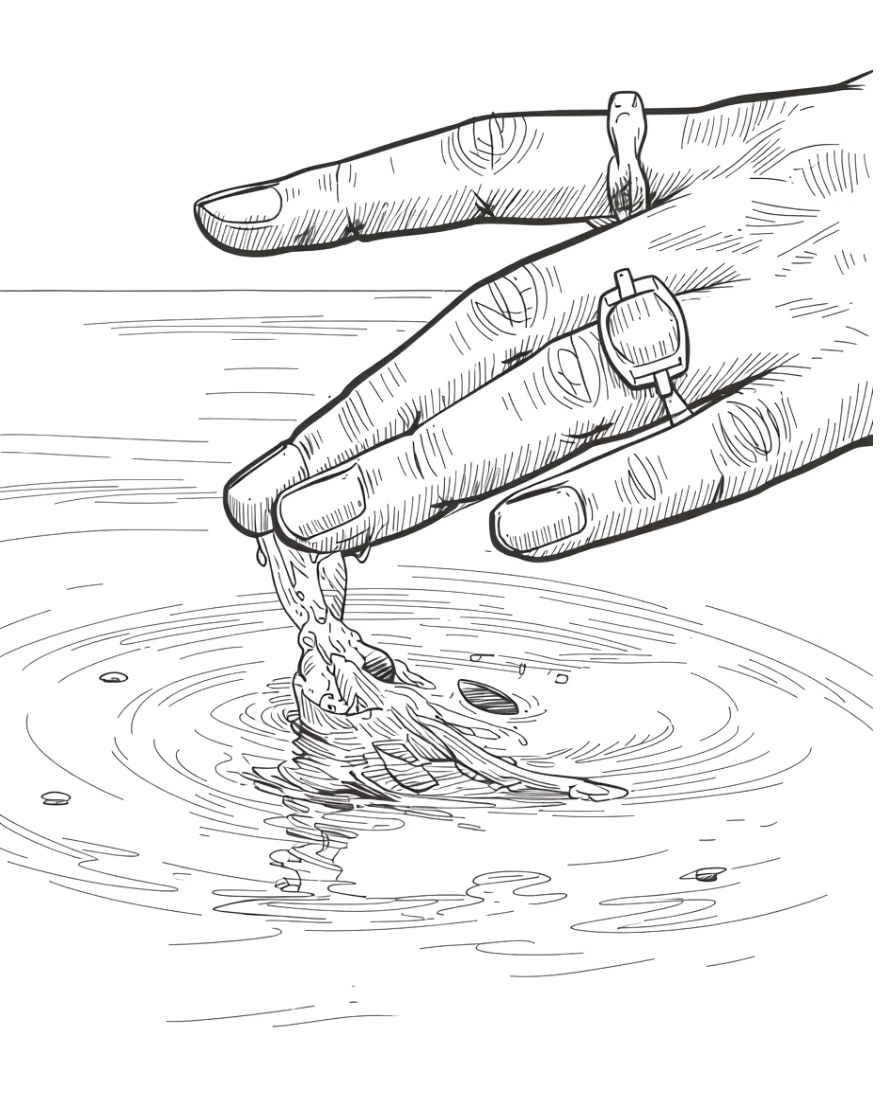
Action: Stir or swirl your water before drinking. Bring gratitude to the exchange.
Water must actually make it inside your cells. Drinking more water does not automatically mean your cells are absorbing it.
Hydration is electrical before it is mechanical. Your cells structure water, organising molecules to transport them from the extracellular space into the interior. This process is powered by the electrical voltage across your cell membranes and mitochondria.
Cell membranes are phospholipid bilayers that are semi-conductive. The quality of dietary fats you consume directly determines how well your membranes hold charge and facilitate water transport.
Drink your food. Broths, porridges, raw vegetables, and lightly cooked eggs all contribute meaningfully to hydration in ways plain water cannot match.
The fourth phase of water, also called structured, hexagonal, coherent, or biological water, is a plasma-like crystalline gel state. It is the form water takes inside living cells, and the form that hydrates most effectively.
Structured water forms naturally through movement (vortexing), sunlight exposure, contact with natural minerals, and low temperatures. It is degraded by stagnation, right-angle pipes, reverse osmosis, and electromagnetic pollution.
At home: Swirl vigorously with a spoon before drinking. Store in glass or stainless steel. Add shungite or quartz crystals to your storage vessel. Hold your glass and bring a quiet intention before drinking.
You can drink excellent water and still be chronically dehydrated if your environment is working against you.
- Ultra-processed food: Low moisture, high in synthetic additives that increase cellular water demand.
- EMF exposure: Disrupts cellular voltage and impairs membrane function.
- Sleep deprivation: Interrupts the body's overnight repair and hydration cycles.
- Fluoride & Chlorine: Chlorine disrupts gut microbiome. Fluoride has documented thyroid impacts.
- Heavy metals & PFAS: Accumulate in tissue over time, requiring robust cellular hydration to process.
- Microplastics: Found in water, food, and air. Chemical additives within them are often more harmful than the plastic itself.
What you send down the drain matters. Bleach, ammonia, and synthetic cleaners are not fully broken down in treatment. Vinegar, baking soda, citric acid, and simple soap are effective alternatives.

Are your cells truly hydrated?
6 questions · 2 minutes · No email required